
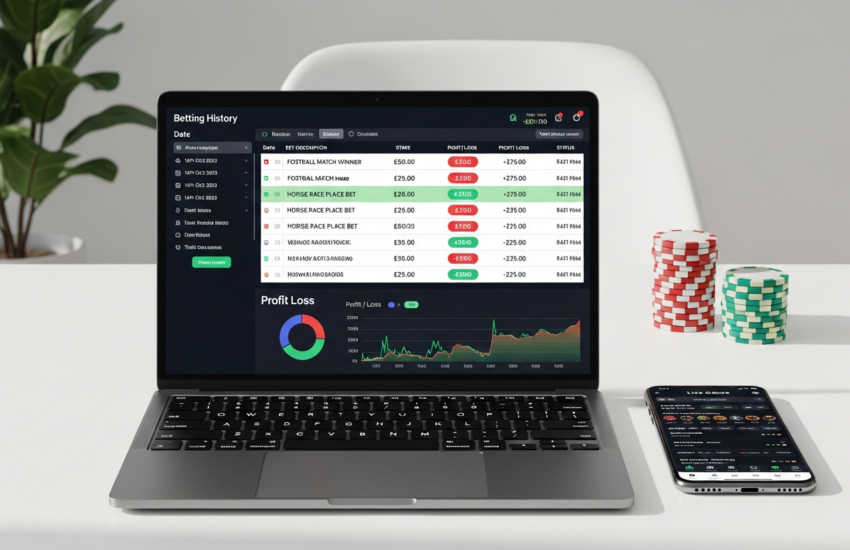
Tracking your betting history is one of the most powerful habits you can develop as a bettor in India. Whether you wager on cricket, football, kabaddi, or any other sport, keeping accurate records transforms casual betting into a disciplined, data-driven activity. Proper tracking enables you to analyze performance, maintain strict bankroll control, and practice responsible gambling by spotting problematic patterns before they escalate. For Indian bettors navigating a diverse range of platforms—each with its own interface, wallet systems, and settlement workflows—understanding how to capture and review your wager log is essential.
Indian betting platforms differ significantly in how they present your stake history, deposit history, withdrawal history, and bet slips. Some offer comprehensive sportsbook dashboards with export features, while others split data across multiple pages or limit the timeframe for accessing past records. This guide walks you through both manual and automated approaches to betting records management, offering step-by-step instructions tailored to the Indian market. By the end, you’ll have a clear roadmap for building an audit-friendly tracking system that fits your betting volume and technical comfort level.
Why betting history tracking matters on Indian platforms
Maintaining detailed betting records serves three critical purposes for Indian bettors. First, it enables thorough performance review: you can measure win rates, calculate return on investment (ROI), and identify which sports, markets, or bet types deliver the best results. Second, it reinforces bankroll discipline by keeping your spending transparent and helping you spot trends like increasing stake sizes or chasing losses. Third, comprehensive logs provide audit trails—essential if you need to reconcile wallet transactions, claim winnings, or demonstrate responsible gambling practices to yourself or others.
The Indian betting landscape introduces unique tracking considerations. Many platforms support multiple sports—cricket, football, tennis, kabaddi, and more—each with different odds formats and settlement times. Wallet flows are often complex, involving deposits from UPI, net banking, or e-wallets, plus withdrawals that may take hours or days to clear. Additionally, some operators only retain in-app history for 30 or 90 days, and export options vary widely: one platform might let you download a CSV of all bets, while another requires manual screenshots of each settled slip.
These platform-specific quirks mean that a one-size-fits-all approach rarely works. Indian bettors benefit most from flexible systems that combine in-app navigation, manual logging, and—where volume justifies it—automated sync tools. Understanding these nuances upfront will save you hours of frustration and ensure your performance analytics remain accurate.
What you can learn from your history
Your wager log is a rich source of insights that go far beyond a simple profit-and-loss tally. By reviewing your betting records systematically, you unlock several analytical advantages:
- Win/loss trends by sport or market: Discover whether you’re consistently profitable in IPL cricket but losing on football accumulators, allowing you to allocate your bankroll more intelligently.
- ROI and yield calculations: Track your return on investment over weeks or months to measure true profitability, accounting for variance and streaks.
- Stake discipline and unit consistency: Identify periods when you deviated from your staking plan, such as doubling up after losses or betting too large a percentage of your bankroll.
- Time and frequency patterns: Spot if you place more losing bets late at night or on weekends, signaling emotional or impulsive wagering.
- Bonus and promotion impact: Evaluate how free bets, cashback, or odds boosts affect your overall profitability, separating promotional value from core betting skill.
- Odds movement and closing line value: Compare the odds you took with the closing odds to assess whether you’re consistently finding value or getting the worst of the market.
These insights help you refine your strategy, avoid overbetting, and recognize when a losing streak is due to bad luck versus poor decision-making. For responsible gambling, they also serve as early-warning signals: a sudden spike in bet frequency or stake size can indicate that emotions are overriding discipline.
Indian-platform-specific tracking challenges
Bettors in India face several obstacles that make tracking more complex than in some international markets. Many platforms limit the depth of in-app history—settled bets older than 30 or 60 days may disappear from the main interface, forcing you to rely on transaction exports or personal logs. Others split betting data across multiple sections: open bets appear on one tab, settled slips on another, and wallet deposits or withdrawals in a separate transaction history.
Export functionality and file-naming conventions also vary. Some sportsbooks let you download a full Excel or CSV report with columns for date, event, odds, stake, and profit; others only offer PDF statements that require manual data entry. Mobile apps may hide advanced export features that are visible on desktop web versions, meaning you might need to switch devices to access complete records. Understanding your platform’s specific limitations and workarounds is the first step toward building a reliable tracking workflow.
Where to find betting history in app or website dashboards
Indian betting platforms typically organize your records in a few common locations, though the exact labels and menu paths differ. Knowing where to look—and what each section reveals—will help you gather complete data for your wager log.
The table below compares the most frequent locations you’ll encounter on Indian sportsbooks, explaining what each section usually displays and when it’s most useful for tracking purposes.
| Location | What it usually shows | Best use |
|---|---|---|
| Bet History / My Bets | All placed bets with event name, odds, stake, status (open/settled/void) | Core source for logging individual wagers and outcomes |
| Transaction History / Wallet | Deposits, withdrawals, bonus credits, and bet settlements with timestamps | Reconciling bankroll changes and verifying payment flows |
| Settled Bets | Only bets that have been graded (won, lost, or voided) | Quick profit-and-loss summaries and ROI calculations |
| Open / Pending Bets | Active wagers awaiting event results | Monitoring current exposure and outstanding stakes |
| Reports / Statements | Downloadable summaries (CSV, PDF, Excel) for custom date ranges | Bulk export for manual or automated tracking tools |
Most platforms place these features under a profile icon, hamburger menu, or dedicated “History” tab. On mobile apps, you may need to navigate through account settings or a side menu, while desktop sites often display history links in a top navigation bar. If you can’t find detailed records in the app, try logging in via a browser—some operators reserve full reporting features for their web interfaces.
Navigation paths to check first
To ensure you capture every bet and transaction, follow these steps whenever you log in to review your betting records:
- Tap or click your profile icon or account menu (usually top-right on desktop, bottom-right or hamburger icon on mobile) and look for “Bet History,” “My Bets,” or “Betting Records.”
- Check both “Open Bets” and “Settled Bets” sections to see pending wagers and finalized results. Some platforms combine these; others keep them separate.
- Visit the transaction or wallet history page to cross-reference deposits, withdrawals, and bet settlements, ensuring your bankroll balance matches your logged activity.
- Look for an “Export” or “Download” button in the history view—this may be labeled “Statement,” “Report,” or represented by a download icon—and select your desired date range.
- If the app lacks export options, switch to the desktop website and repeat the navigation. Many Indian platforms hide advanced features on mobile to simplify the interface.
- Take screenshots of individual bet slips as a backup, especially for high-value wagers or any bets placed with promotional funds that might not appear in standard reports.
By systematically exploring these areas on both app and web views, you’ll avoid missing data that lives in platform-specific silos.
Manual tracking with spreadsheets
For most bettors—especially those placing a few wagers per week—manual tracking in Excel or Google Sheets offers the best balance of simplicity, customization, and control. Unlike automated tools, spreadsheets don’t require API access or third-party permissions, and you can tailor every column to your specific needs.
The table below outlines essential spreadsheet columns, their purpose, and examples to help you design an effective wager log.
| Column | Purpose | Example |
|---|---|---|
| Date | When you placed the bet; enables time-series analysis | 15-Apr-2025 |
| Sport / Market | Categorize by cricket, football, tennis, etc., and bet type | Cricket – Match Winner |
| Event | Match or event name for reference | MI vs CSK, IPL 2025 |
| Selection | The specific outcome you backed | Mumbai Indians |
| Odds | Decimal, fractional, or American odds you accepted | 1.85 |
| Stake | Amount wagered in rupees or units | ₹500 |
| Result | Outcome: Win, Loss, Void, or Push | Win |
| Profit / Loss | Net return (stake × odds – stake for wins; –stake for losses) | ₹425 |
| Platform | Which sportsbook you used (for multi-platform tracking) | Platform A |
| Notes | Context like bonus use, reasoning, or external factors | Used ₹100 free bet |
Once you’ve set up these columns, consider adding calculated fields for cumulative profit, ROI percentage, and running bankroll balance. Google Sheets and Excel both support formulas that update automatically as you log new bets, giving you real-time performance snapshots.
Recommended spreadsheet columns
Beyond the core fields in the table above, advanced bettors often include additional columns to unlock deeper insights and maintain audit-ready records:
- Bet ID or reference number: Copy the unique slip ID from your platform to simplify cross-checking and dispute resolution.
- Closing odds: Record the market odds at event start or close to measure whether you captured value or got a poor line.
- Bookmaker or promotion: Note if the wager used a free bet, cashback, or odds boost, separating promotional edge from core betting skill.
- Units staked: Normalize stakes to units (e.g., 1 unit = ₹100) for easier cross-sport and cross-time comparisons.
- Settlement date: Track when the platform graded the bet, especially important for voided or delayed events.
- Source or rationale: Record whether the pick came from your own analysis, a tipster, statistical model, or gut feeling—invaluable for evaluating different decision-making processes.
- Odds format: If you switch between decimal, fractional, and American, note the format to avoid conversion errors.
- Currency or wallet: For multi-wallet platforms, specify which balance you used (main wallet, bonus wallet, etc.).
Tailoring your spreadsheet to include these optional fields ensures that as your betting sophistication grows, your tracking system scales with you.
How to keep manual logs accurate
The biggest pitfall of manual tracking is delayed or incomplete data entry. To maintain accuracy, commit to logging every bet immediately after placement—or at worst, at the end of each betting session. Waiting days or weeks invites memory errors, missed bets, and misrecorded stakes. Set a reminder on your phone or establish a fixed daily time (e.g., before bed) to reconcile that day’s activity.
Use screenshots of bet slips and settlement confirmations as backup documentation. Many Indian platforms send email or SMS receipts; save these in a dedicated folder for easy reference. When bets settle, compare the platform’s profit-and-loss summary with your spreadsheet totals. Any discrepancy signals a data-entry mistake, a voided bet you forgot to update, or—rarely—a platform error that you should query with customer support. Regular reconciliation keeps your wager log trustworthy and audit-ready.
Automated bet tracker apps and sync tools
For high-volume bettors placing dozens of wagers weekly, manual entry becomes impractical. Automated tracking tools promise to import bet slips directly from your sportsbook account, eliminating repetitive data entry and reducing human error. However, automation introduces new considerations around security, accuracy, and platform compatibility.
The table below compares manual spreadsheets with automated sync tools, highlighting the trade-offs that Indian bettors should weigh.
| Tracking method | Pros | Cons |
|---|---|---|
| Manual Spreadsheet | Full control, no third-party access, works with any platform, highly customizable | Time-consuming, prone to user error, requires discipline to log promptly |
| Automated Sync Tool | Fast, reduces manual effort, real-time updates, multi-bookmaker support | Requires login credentials or API, security risks, may miss bets if platform changes UI |
| Hybrid (Spreadsheet + Exports) | Balances control and convenience, leverages platform CSV downloads, offline backups | Still some manual work, export formats may vary, limited real-time visibility |
| Bet Tracker Apps (standalone) | Mobile-friendly, gamified dashboards, community features, cross-platform portability | Often no direct sync with Indian platforms, manual entry still needed, subscription fees |
Few automated tools currently support India-specific betting platforms, so verify compatibility before committing. Look for solutions that offer encrypted credential storage, two-factor authentication (2FA), and regular backups. Always read reviews and check whether the tool’s developers have a track record of maintaining support as sportsbook interfaces evolve.
When automation is worth it
Deciding whether to invest in an automated tracker depends on your betting volume, technical comfort, and risk tolerance. Consider automation if the following apply:
- You place more than 10–15 bets per week, making manual entry a significant time burden that could be better spent on analysis or research.
- You use multiple sportsbooks, and consolidating data from several platforms manually is error-prone or cumbersome.
- You want real-time dashboards, with live profit-and-loss tracking, ROI graphs, and automated alerts for unusual activity.
- The tool supports your platform(s), with proven reliability and active developer updates to handle UI changes.
- You understand the security trade-offs, including the need to share login credentials or API tokens, and you’re comfortable with the tool’s privacy policy and data handling.
- You maintain regular backups, exporting data from the automated tool to local spreadsheets or cloud storage in case the service shuts down or loses sync.
If you’re a casual bettor placing a handful of wagers monthly, manual tracking remains the safest, most cost-effective choice. Automation shines for serious, high-frequency bettors who treat wagering as a data-intensive hobby or profession.
What data to record for meaningful analysis
Capturing bets is only the first step; the real value lies in recording data that enables actionable insights. Beyond basic win-loss tallies, serious bettors track factors like return on investment, closing line value, and behavioral patterns. This richer dataset transforms your wager log into a powerful performance analytics engine.
Focus on metrics that reveal not just what happened, but why it happened and how you can improve. By logging context—such as the time of day, promotional offers used, or whether you followed your pre-match analysis—you build a feedback loop that refines your strategy over time. Monthly and weekly reviews of these fields will highlight strengths to leverage and weaknesses to address.
Core data fields
The table below lists the most important fields to include in your tracking system, along with explanations of why each matters for long-term profitability and responsible gambling.
| Field | Why it matters |
|---|---|
| Date & Time | Reveals time-of-day patterns and frequency trends; essential for spotting impulsive late-night bets |
| Event & Selection | Allows sport-by-sport and market-by-market performance breakdowns; identifies your profitable niches |
| Odds (Opening & Closing) | Measures closing line value—whether you consistently beat the market or get worse prices than closing odds |
| Stake & Units | Tracks unit consistency and staking discipline; flags variance from your bankroll-management plan |
| Profit / Loss | Core metric for ROI and cumulative bankroll tracking; must account for voided bets and partial payouts |
| Bonus or Promotion Used | Separates value from promotional offers versus inherent betting skill; critical for accurate performance measurement |
| Source / Rationale | Tags picks by method (model, gut, tipster); enables you to compare which decision-making process yields best results |
| Platform / Wallet | For multi-book or multi-wallet users; simplifies reconciliation and identifies which platforms offer best odds |
Recording these fields consistently transforms raw bet slips into a structured database. You can then filter, sort, and pivot your data to answer questions like “Am I more profitable on cricket than football?” or “Do I lose more when I bet live versus pre-match?”
Metrics to review weekly or monthly
Once you’ve built a comprehensive wager log, schedule regular reviews to extract actionable insights. Prioritize these metrics in your weekly or monthly analysis sessions:
- Return on Investment (ROI): Calculate total profit divided by total staked, expressed as a percentage. This single number summarizes your betting efficiency and should be your primary performance indicator.
- Sport and market breakdown: Compare ROI across cricket, football, tennis, and other sports, as well as bet types (match winner, over/under, accumulators). Allocate more bankroll to your most profitable areas.
- Closing line value (CLV): For each bet, compare the odds you took with the closing odds. Consistently beating the closing line is the strongest predictor of long-term profitability.
- Stake consistency and unit deviation: Review whether you adhered to your staking plan. Identify any sessions where you doubled stakes after losses or bet disproportionately large amounts.
- Bet frequency and session patterns: Track how many bets you place per day or week, and note any spikes. High-frequency periods may correlate with tilt, chasing, or overconfidence.
- Win rate versus expected win rate: Compare your actual hit rate with the implied probability of your average odds. Large deviations suggest either good luck, bad luck, or a mismatch between your selections and true probabilities.
- Bankroll growth or drawdown: Plot your cumulative profit over time. Steady, gradual growth signals disciplined betting; sharp swings or downtrends warrant immediate strategy review.
Conduct these reviews at consistent intervals—Sunday evening for weekly checks, the first of each month for broader trends. Document your findings in a summary tab or journal, noting any adjustments to your staking plan, research process, or bet selection criteria.
Security, privacy, and compliance checks
Your betting records contain sensitive financial and personal information, so protecting them is as important as maintaining them. Indian bettors should be especially vigilant about data security, given the mix of online platforms, third-party tools, and cloud storage involved in comprehensive tracking.
The table below outlines key security checks, their importance, and the actions you should take to safeguard your wager log and wallet data.
| Check | Why it matters | Action |
|---|---|---|
| Strong Passwords | Prevents unauthorized access to sportsbook accounts and cloud tracking files | Use unique, 12+ character passwords with a password manager; never reuse betting-site passwords |
| Two-Factor Authentication (2FA) | Adds a second layer of defense against account takeovers and fraudulent withdrawals | Enable 2FA on betting platforms, email, and any cloud storage (Google Drive, OneDrive) holding your logs |
| Third-Party Tool Permissions | Automated trackers may request login credentials or API tokens; breaches expose wallet funds | Only use reputable tools with encrypted storage and active support; revoke access if you stop using the service |
| Wallet Reconciliation | Detects platform errors, unauthorized transactions, or tracking mistakes that could cost you money | Weekly, compare your logged deposits/withdrawals with the platform’s transaction history; query discrepancies immediately |
| Data Backups | Protects against data loss from device failure, account suspension, or cloud service outages | Export spreadsheets or CSV files monthly; store copies on a local hard drive and a separate cloud provider |
| Compliance and Tax Records | Indian tax authorities may require proof of gambling income; complete logs simplify filings and audits | Retain detailed records for at least 3–5 years; consult a tax professional for reporting obligations |
By treating your betting records with the same care as bank statements or tax documents, you minimize the risk of financial loss, identity theft, or compliance headaches. Regular security audits—checking active logins, reviewing third-party permissions, and updating passwords—should become a quarterly habit.
Safer ways to use tracking tools
If you choose automated sync tools or third-party bet trackers, adopt a defense-in-depth approach. Use strong, unique passwords generated by a reputable password manager, and enable two-factor authentication on every service that supports it—especially your sportsbook account, email, and cloud storage. Only install tracking apps from official sources (Google Play, Apple App Store) or verified developer websites, avoiding pirated or modified versions that may contain malware.
Export your data regularly to local backups that you control. Even the best cloud service can experience downtime, data corruption, or—in rare cases—shutdown. A monthly CSV or Excel export to your own device ensures you retain access to your wager log indefinitely. Encrypt sensitive files if you store them on shared devices or public cloud folders, and consider using a dedicated device or browser profile for betting to isolate your activity from general browsing.
Common mistakes and how to avoid them
Even disciplined bettors fall into tracking traps that undermine the accuracy and usefulness of their records. Recognizing these pitfalls early helps you build habits that keep your wager log reliable and your analysis meaningful.
- Logging bets days or weeks late, relying on memory instead of contemporaneous records, which leads to forgotten wagers, misremembered stakes, and inaccurate profit calculations.
- Inconsistent unit sizing or currency mixing, such as recording some bets in rupees and others in units, making ROI comparisons impossible without manual conversion.
- Ignoring voided or cancelled bets, leaving them in your log as losses or wins instead of removing them, which distorts your true performance metrics.
- Failing to reconcile platform statements with your spreadsheet, allowing data-entry errors or missed bets to compound until your log no longer matches your bankroll balance.
- Not accounting for bonuses and promotions separately, which inflates your perceived skill edge when much of your profit actually came from sportsbook offers rather than betting acumen.
- Using only win rate as a success metric, ignoring ROI and closing line value, so you mistake short-term variance for sustainable performance.
- Sharing tracking files or login credentials insecurely, risking data breaches, account takeovers, or unauthorized bets placed in your name.
By staying aware of these common errors, you can implement safeguards—such as daily logging routines, standardized units, and weekly reconciliation—that keep your tracking system trustworthy.
Tracking errors that distort results
Late or missing entries are the single biggest cause of flawed betting records. When you wait several days to log a batch of bets, you’re more likely to forget one, transpose a stake amount, or misremember whether a bet won or lost. Settlement delays on Indian platforms—where some markets take hours or even days to grade—compound the problem: you may place ten bets on Saturday but only see five settled by Sunday evening, tempting you to skip the unsettled ones “for now” and forget about them entirely.
Incomplete data also skews short-term performance reviews. If you log only your wins or only your largest bets, your calculated ROI will be wildly optimistic. Similarly, failing to mark voided bets as such leaves phantom losses or wins in your record, distorting every downstream metric. The solution is simple but requires discipline: treat bet logging as non-negotiable, part of the same workflow as placing the wager itself.
Simple habits that improve accuracy
Adopting a few straightforward routines will keep your wager log precise and audit-ready with minimal extra effort:
- Log every bet immediately after placement, while the details are fresh and the bet slip is still on your screen. If you place multiple wagers in a session, enter them all before closing the app.
- Set a daily review time—such as 10 PM each evening—to check that day’s activity, update any newly settled bets, and reconcile your platform balance with your logged bankroll.
- Use standardized units or a single currency throughout your spreadsheet. If you bet in rupees but want unit-based analysis, create a calculated column that divides stake by your base unit size.
- Mark voided, cancelled, or pushed bets clearly, either by deleting the row (with a note) or using a “Void” result tag, and exclude them from profit and ROI calculations.
- Perform weekly reconciliation: compare your spreadsheet’s cumulative deposits, withdrawals, and profit with the platform’s transaction history. Investigate any mismatch immediately.
- Take regular backups—at minimum monthly, ideally weekly—exporting your sheet to CSV and storing a copy on a separate device or cloud account.
These habits require only a few minutes per day but dramatically improve the reliability of your performance analytics and bankroll tracking.
Best article angle and content gap to outperform competitors
Most generic betting-history guides focus on international platforms with robust APIs, comprehensive export features, and desktop-first interfaces. They rarely address the realities Indian bettors face: fragmented UI elements, limited historical windows, multi-wallet systems, and platforms that prioritize mobile apps over web dashboards. By centering your approach on these India-specific nuances—such as step-by-step navigation for popular local sportsbooks, advice on reconciling UPI deposits with bet settlements, and workflows that accommodate export limitations—you create a resource far more practical than broad, one-size-fits-all content.
Another gap in existing guides is the lack of repeatable, audit-friendly workflows. Competitors list what to track but rarely explain how to integrate logging into a daily or weekly routine. Providing a concrete, calendar-based system—log bets nightly, reconcile wallets weekly, review metrics monthly—gives readers a turnkey solution they can implement immediately. Combining this with downloadable spreadsheet templates and localized examples (IPL cricket, ISL football) delivers unique value that positions your content as the definitive guide for Indian bettors.
Unique angle to include in the final article
Focus your content on localized UI navigation paths, showing readers exactly where to tap or click on typical Indian platform layouts, and include visual walkthroughs (described in text) of export and download procedures. Emphasize wallet reconciliation as a core discipline, explaining how to cross-check deposit history, withdrawal requests, and bet settlements to catch discrepancies early. Offer a ready-to-use weekly checklist and monthly review template that readers can print or save, transforming abstract advice into a concrete, repeatable habit. This practical, step-by-step, India-centric approach fills the content gap left by generic international guides and establishes your article as the go-to resource for serious bettors seeking accurate, actionable tracking systems.